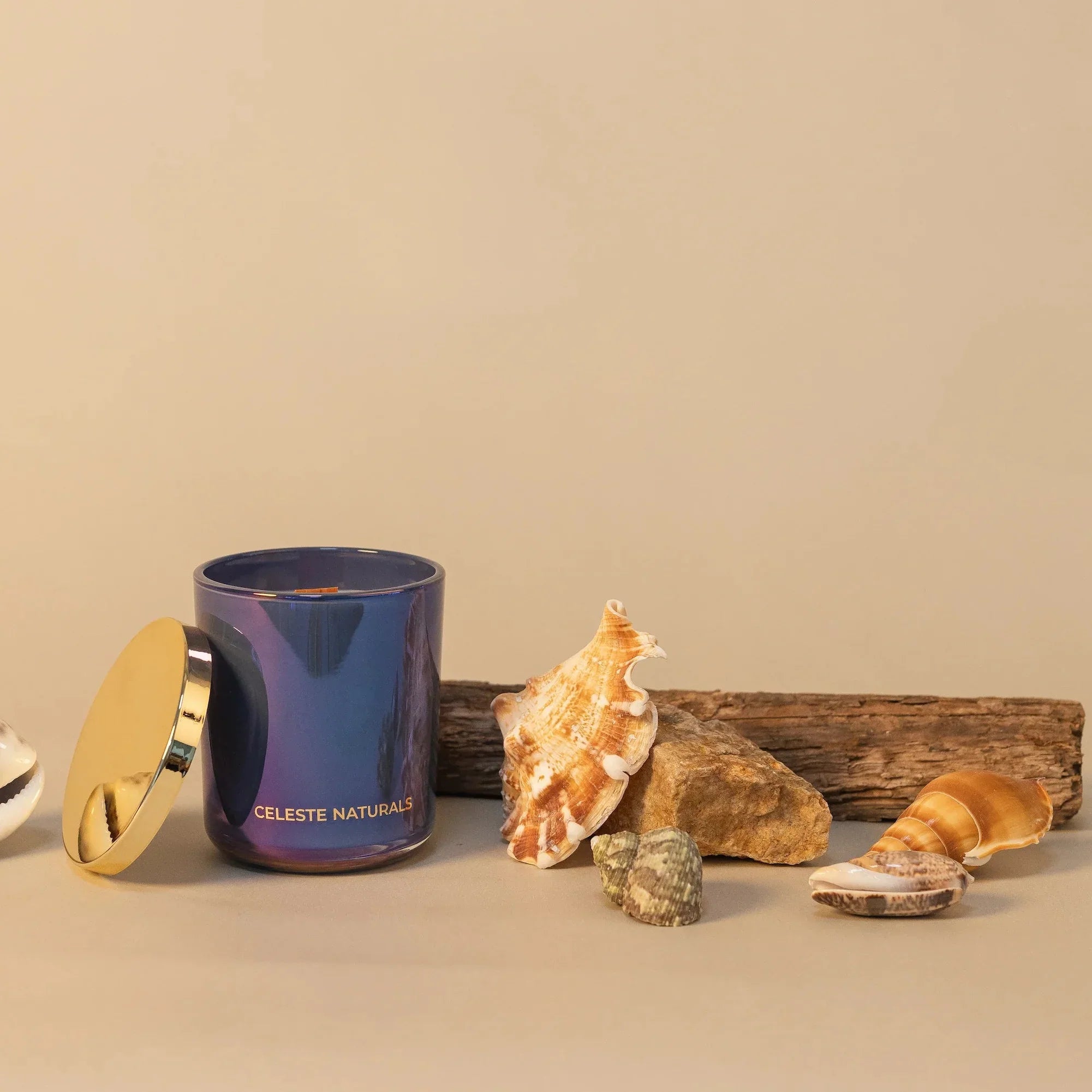
Why Wax Blend Matters
We pour every candle in a coconut apricot wax blend: coconut wax for how well it holds and releases fragrance oil, blended with apricot wax to firm it up, since coconut wax on its own is naturally soft and prone to sinkholes and uneven melting. The blend is fully plant-based, and it's commonly cited in the candle-making world for a stronger scent throw than soy wax, both the cold throw you notice before lighting and the hot throw that fills a room once it's burning. Paired with a wood wick, that's what lets a scent like the rose-forward Beautiful or the crisp linen notes in So Clean come through true to their actual profile, top to bottom, instead of fading into a faint hint by the second hour.
Why a Wood Wick?
Our candles use a wood wick rather than a cotton one. Beyond the aesthetic, a wood wick adds a soft, crackling sound as it burns, similar to a small fireplace, which adds to the overall feel of lighting one in the evening.
What This Means for You
Together, the wax blend and wood wick are built for an even burn and a true-to-scent fragrance throw, so the room actually smells like the candle you picked, not a faint hint of it.
Getting the Best Burn
A few simple habits go a long way toward getting the most out of every candle. See our full candle care guide for wick trimming, first-burn timing, and safety basics.
Shop the Collection
Each scent in our candles collection is hand-poured in small batches. Try After Hours for something moody and warm, or Sage + Sea Salt for a clean, grounding scent.
Frequently Asked Questions About Our Candle Wax and Wicks
Are wood wick candles safe?
Yes, when trimmed and used properly. A wood wick burns similarly to a cotton wick and releases the same basic combustion byproducts as any burning candle. Keeping the wick trimmed to about 1/4 inch, burning in a ventilated room, and following normal candle safety practices, never leaving one unattended, keeping it away from drafts and flammable items, keeps a wood wick candle just as safe as any other.
How does coconut wax compare to soy wax?
Both are plant-based alternatives to paraffin, and both burn cleanly. Coconut wax is generally considered to have a stronger scent throw than soy, since it holds and releases fragrance oil more readily, which is part of why we chose a coconut apricot blend. Soy wax is still a solid, widely used option, just with a somewhat lighter throw in most side-by-side comparisons.
Is coconut apricot wax better than soy or paraffin wax?
It depends what you're comparing on. Pure paraffin generally has the strongest scent throw of any wax type, and it's the industry standard for a reason. Coconut apricot wax won't quite match that, but it does outperform soy wax on scent throw while staying fully plant-based, which is the tradeoff we chose: a cleaner-burning, non-petroleum wax with a stronger throw than soy, even if it falls just short of pure paraffin.
Why does my wood wick sometimes not light easily?
This is usually a sign the wick needs trimming. A too-long or charred wick tip can be harder to light; trimming it to about 1/4 inch before each burn generally solves it.
Do wood wicks produce more smoke than cotton wicks?
Not when properly trimmed and maintained. A wood wick that's kept short burns about as clean as a cotton wick, and an untrimmed wick is the most common cause of extra smoke or soot in either type.
Why does my candle smell stronger in some rooms than others?
Fragrance throw is affected by room size, airflow, and burn time, not just the candle itself. A larger or more ventilated room will naturally carry scent differently than a small, closed one.
Are coconut apricot candles vegan?
The wax blend itself is plant-based. If that matters to you, check the individual scent's ingredient list, since some fragrance and dye components can vary between vendors.